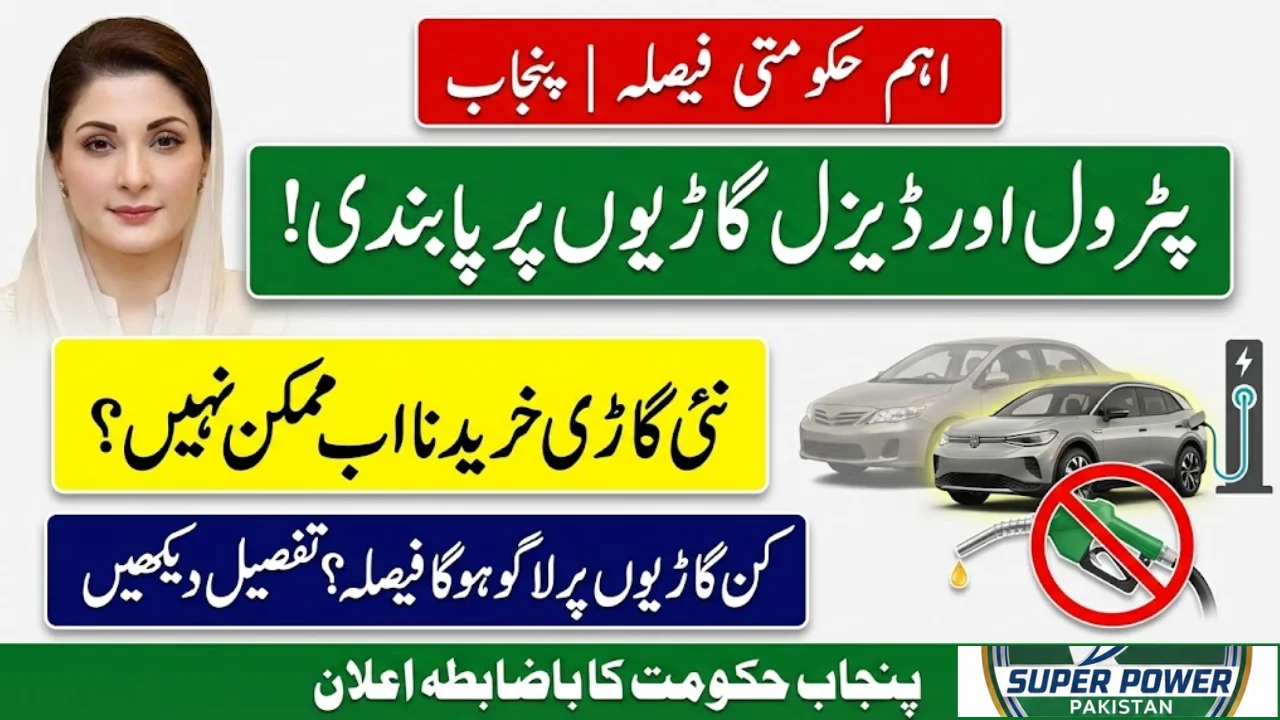
Punjab has taken a decisive step that quietly reshapes how public money will be spent on transport. The Punjab Government has officially stopped the purchase of new petrol and diesel vehicles for most provincial departments, signaling a long-term shift toward electric and hybrid mobility.
This is not just an environmental announcement. It has direct financial, policy, and public-impact consequences that affect government spending, fuel costs, and the future direction of transport across the province.
What the New Vehicle Ban Actually Means
Under the updated policy framework:
-
Provincial departments can no longer buy new petrol or diesel vehicles
-
Only electric (EV) or hybrid vehicles will be approved for routine use
-
Field and emergency operations may receive limited exemptions
-
Future approvals will be checked against green compliance rules
The policy applies to new procurement only. Existing petrol and diesel vehicles already in service are not being scrapped immediately.
Why Punjab Took This Decision Now
The government’s internal assessments showed that:
-
Fuel costs for official vehicles are rising every year

-
Maintenance of combustion engines is expensive and inefficient
-
International funding and climate commitments favor clean transport
-
EV infrastructure in Punjab is now technically feasible
This move aligns Punjab with global public-sector transport trends, where governments reduce fuel dependency to control long-term costs.
How Much Money the Government Is Expected to Save
Although EVs cost more upfront, they save large amounts of public money over time.
Estimated Financial Impact
-
Fuel savings: Thousands of liters saved per vehicle annually
-
Maintenance savings: EVs have fewer moving parts
-
Operational savings: Lower per-kilometer running cost
On average, a government vehicle switching from petrol to electric can save:

-
Rs. 500,000 to Rs. 800,000 per year in fuel and maintenance combined
Across hundreds of vehicles, this translates into millions of rupees saved annually, money that can be redirected to health, education, or public services.
Who Benefits From This Policy
Direct Benefits
-
Reduced government fuel expenditure
-
Cleaner air in major cities
-
Lower operational costs for departments
Indirect Public Benefits
-
Faster rollout of EV charging stations
-
Encouragement for private EV adoption
-
Job creation in EV servicing and infrastructure
-
Less pressure on imported fuel bills

Citizens may not receive cash directly, but they benefit through better air quality and smarter use of tax money.
New Rule Linked to Petrol Pumps (Important Detail)
An important addition to this policy is that:
-
New petrol pump approvals may now require EV charging points
-
This ensures charging infrastructure grows alongside demand
-
It prevents future bottlenecks for EV users
This rule pushes the private sector to prepare early for electric mobility.
Are There Any Exceptions to the Ban?
Yes. The policy allows flexibility where EVs are not yet practical:
-
Remote field operations
-
Specialized machinery

-
Emergency or rescue services (where required)
These exceptions are case-based, not automatic.
What This Signals for the Future of Transport in Punjab
This decision suggests:
-
Gradual reduction of petrol dependency
-
Stronger EV incentives ahead
-
Possible future policies for public transport electrification
-
Alignment with climate and energy goals
It is a directional change, not a one-time announcement.
Quick Summary (At a Glance)
-
New petrol/diesel vehicle purchases stopped

-
EVs and hybrids now preferred
-
Major fuel and maintenance savings
-
Cleaner environment, smarter spending
-
EV charging infrastructure to expand
FAQs
Does this ban apply to private citizens?
No. The policy applies only to government vehicle procurement, not private buyers.
Will existing petrol vehicles be removed immediately?
No. Current vehicles will continue until replacement cycles end.
How much money will this save the government?
Potentially millions of rupees every year through fuel and maintenance savings.
Are electric vehicles reliable enough for government use?
Yes. Modern EVs are already in use in many public fleets globally.
Will this lead to cheaper EVs for the public?
Indirectly, yes – higher demand and infrastructure usually reduce costs over time.
Final Perspective
The Punjab Government’s decision to stop buying petrol and diesel vehicles is not symbolic—it is financially strategic and future-focused. By cutting fuel dependency today, Punjab is protecting public funds tomorrow while preparing the ground for cleaner transport.
This policy sets a clear signal: the era of automatic petrol-powered government fleets is ending, and a more efficient, electric future is taking shape.