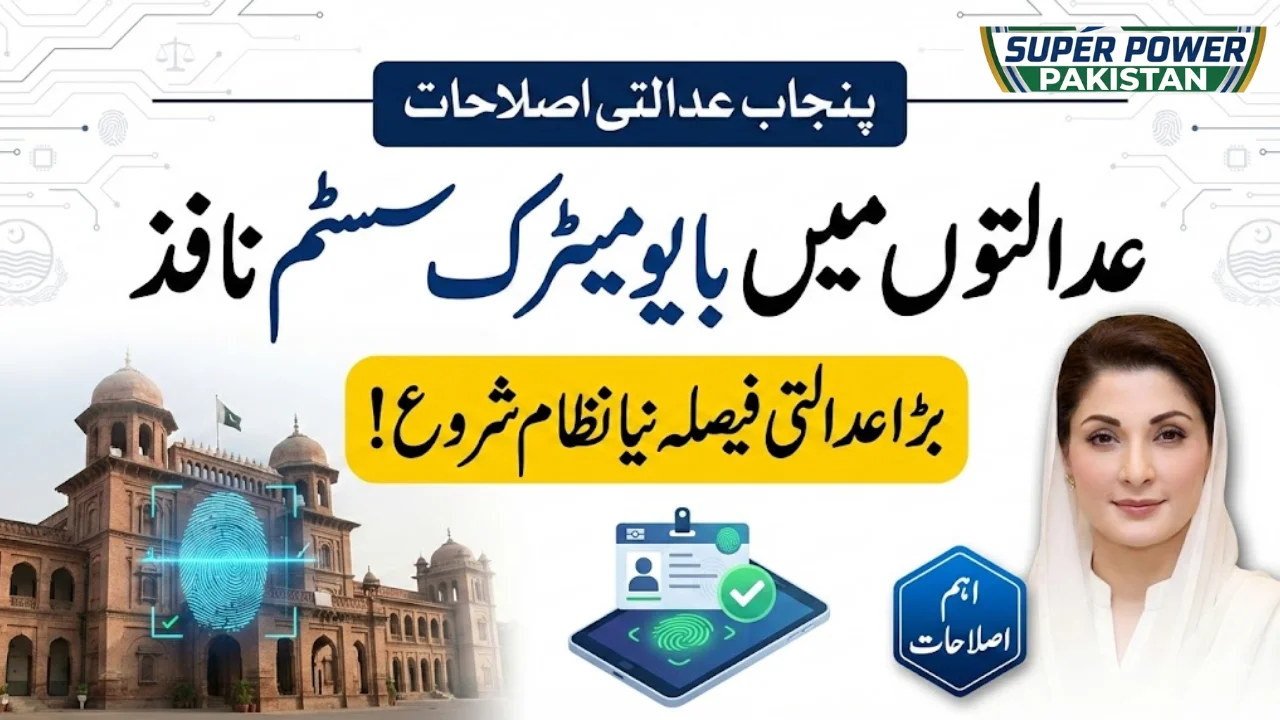
For years, court users across Punjab have complained about fake sureties, false identities, and repeated delays in legal proceedings. These issues not only slow down justice but also weaken public trust in the system. In a significant step toward reform, Punjab courts have now adopted a biometric verification system, marking a major shift in how court proceedings will be handled going forward.
This reform aims to bring greater transparency, accountability, and credibility to judicial processes across the province.
What Is the New Biometric Verification System
The biometric verification system requires mandatory identity verification through NADRA for individuals involved in court cases. This includes petitioners, respondents, and sureties appearing before the courts.
Under this system, identity is confirmed using official biometric records before a case can proceed. Without successful verification, courts will not move forward with hearings or accept bail-related documents.
Where the System Has Been Implemented
The biometric requirement has been enforced across Punjab, covering both higher and lower courts.
Courts Covered Under the Reform
-
Lahore High Court
-
District courts across Punjab
-
Subordinate and special courts
This province-wide rollout ensures uniformity, preventing loopholes that could exist if the system were applied selectively.
Who Must Undergo Biometric Verification
The new system applies to all key parties involved in legal proceedings.
Individuals Required to Verify Identity
-
Petitioners filing cases
-
Respondents named in cases
-
Sureties providing bail guarantees
Court officials have clarified that no exemptions apply under standard circumstances. Verification is now a basic requirement, not an optional step.
How the Verification Process Works
Biometric verification is conducted using NADRA’s official database, ensuring accuracy and reliability.
Verification Process Explained
-
Individual presents CNIC
-
Biometric data is matched with NADRA records
-
Verification status is confirmed digitally
-
Court proceedings move forward only after approval
If biometric verification fails or is not completed, the court will postpone the hearing or reject bail documentation.
Why Punjab Courts Introduced This Reform
Judicial authorities have identified several long-standing problems that this system aims to resolve.
Key Issues the System Targets
-
Fake or repeated identities in court cases
-
Bogus sureties used to secure bail
-
Fraudulent cases filed under false names
-
Delays caused by identity disputes
By confirming identities at the outset, courts expect to reduce unnecessary litigation and procedural abuse.
Impact on Bail and Surety Process
One of the most significant changes relates to bail proceedings.
Under the new system:
-
Bail bonds will not be accepted without biometric verification
-
Sureties must appear personally for identity confirmation
-
Fake or proxy sureties will be eliminated
This ensures that individuals standing as guarantors are real, traceable, and legally accountable.
What This Means for Litigants and Lawyers
The reform affects not just court users, but also legal professionals.
For Litigants
-
Genuine parties benefit from faster, cleaner proceedings
-
Identity disputes are reduced
-
Transparency improves trust in outcomes
For Lawyers
-
Better case integrity
-
Fewer delays due to procedural objections
-
Clearer responsibility of clients and sureties
Although the process may initially add a verification step, courts believe it will save time overall by preventing misuse.
Reaction from Legal Community
Legal experts and judicial circles have largely welcomed the move, describing it as a long-overdue reform.
Many lawyers believe that biometric verification will:
-
Strengthen rule of law
-
Discourage frivolous and fake cases
-
Improve record accuracy
-
Enhance public confidence in courts
Some have acknowledged that early implementation challenges may arise, but see the long-term benefits as far greater.
Common Confusion – Simple Clarifications
Will hearings stop if biometric verification is not done?
Yes. Courts will not proceed without completed verification.
Does this apply to old cases as well?
Yes. When parties appear or sureties are submitted, verification is required.
Is NADRA verification mandatory for everyone?
Yes. Identity confirmation through NADRA is compulsory.
Will this slow down court work initially?
Possibly at first, but courts expect overall efficiency to improve.
Why This Reform Is Considered a Major Step
This initiative represents more than a technical upgrade. It signals a shift toward data-backed justice administration, where identity fraud is no longer easy or risk-free.
By closing the door on false representation, Punjab courts are setting a precedent for cleaner, more accountable legal processes that prioritize genuine cases and lawful conduct.
Conclusion
The adoption of a biometric verification system in Punjab courts marks a major judicial reform aimed at restoring trust, improving transparency, and reducing abuse of the legal system. By making identity verification mandatory for petitioners, respondents, and sureties, courts are taking firm action against fake cases and fraudulent practices.
While initial adjustments may be required, this reform lays the foundation for a more reliable and efficient justice system—one where genuine litigants are heard promptly and accountability is strengthened across Punjab’s courts.