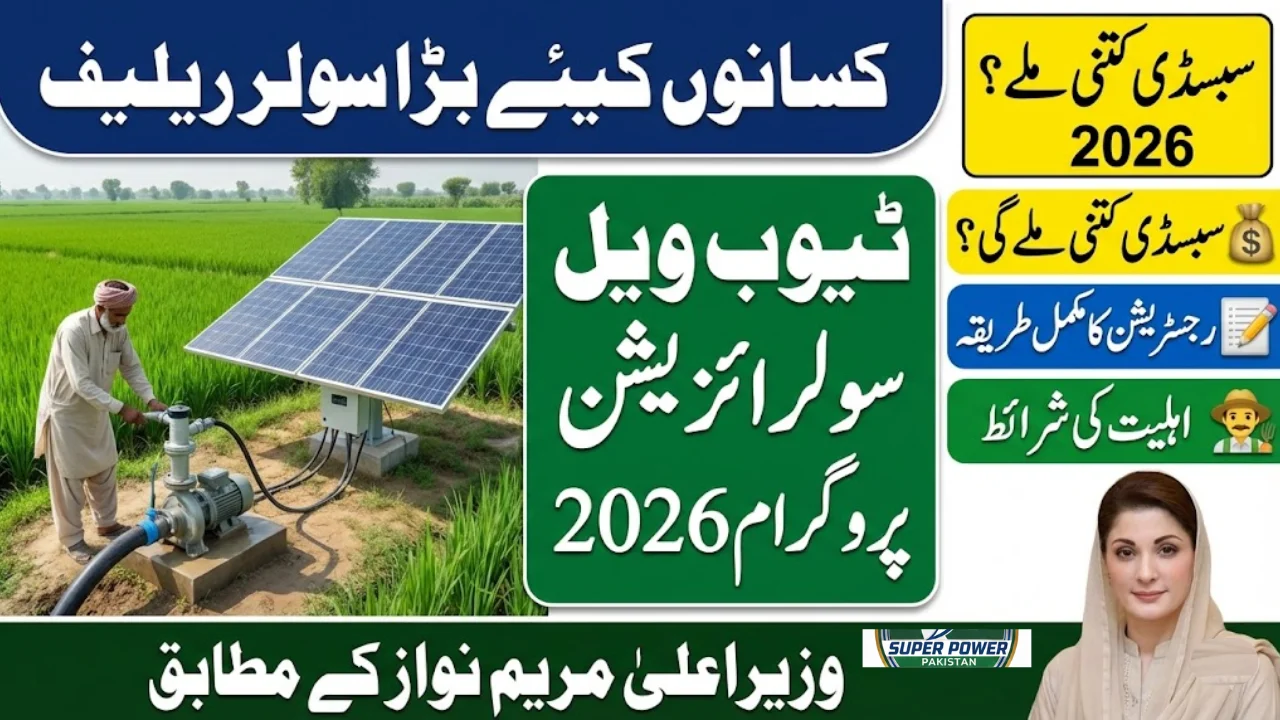
For thousands of farmers across Punjab, irrigation costs have become one of the biggest threats to crop sustainability. Diesel prices, electricity bills, and unreliable supply have pushed many growers into loss. In response, the Punjab government has continued and expanded the Tube Well Solarization Program for 2026, offering a structured subsidy-based shift from diesel and electric tube wells to solar-powered systems.
This guide explains what the program offers, who is eligible, how subsidies work, and what farmers should do to prepare for registration, in clear and practical terms.
What Is the CM Punjab Tube Well Solarization Program
The Tube Well Solarization Program is an agricultural support initiative designed to help farmers convert existing tube wells to solar-powered irrigation systems. Instead of bearing the full cost, eligible farmers receive government subsidy support, significantly reducing the financial burden.
The program aims to:
-
Cut irrigation costs permanently
-
Protect farmers from fuel and electricity price hikes
-
Ensure uninterrupted water supply
-
Promote clean and renewable energy in agriculture
It focuses on long-term productivity, not temporary relief.
Why Tube Well Solarization Matters in 2026
Punjab’s agriculture heavily depends on tube well irrigation. However, traditional systems come with serious challenges.
Key problems farmers face
-
High diesel and electricity expenses
-
Power outages during critical watering times
-
Rising operational costs reducing profit margins
-
Dependence on fuel availability
Solar-powered tube wells address these issues by providing free energy after installation, making irrigation predictable and affordable.
What Subsidy Support Is Offered
Under the 2026 program framework, the government provides fixed subsidy grants based on system capacity. These grants reduce the farmer’s upfront cost while allowing flexibility in system selection.
Indicative Subsidy Structure
-
10 kW system: Government support up to a fixed amount
-
15 kW system: Higher subsidy for medium irrigation needs
-
20 kW system: Maximum subsidy for larger farms
The exact farmer contribution depends on:
-
System size
-
Market price of equipment
-
Approved vendor quotations
In most cases, farmers describe the benefit as major cost-sharing, not a full free installation.
Who Is Eligible for the Program
Eligibility rules are designed to ensure the subsidy reaches genuine agricultural users.
Basic Eligibility Criteria
-
Applicant must be a farmer residing in Punjab
-
Must hold a valid CNIC
-
Ownership or legal control of agricultural land
-
Existing tube well suitable for solar conversion
-
One system per eligible farmer
Priority is often given to small and medium landholders, depending on phase-wise criteria.
What Type of Tube Wells Can Be Solarized
The program generally supports:
-
Diesel-powered tube wells
-
Electric tube wells connected to the grid
The final suitability depends on:
-
Water depth
-
Pump capacity
-
Land size
-
Solar exposure at the site
Technical feasibility is assessed during verification.
How Registration Works for the Program
Registration is typically conducted through official government channels, using a mix of online and field verification methods.
General Registration Flow
-
Farmer submits basic details and CNIC
-
Land ownership and tube well data is provided
-
Application enters verification phase
-
Eligible applications move to selection process
-
Approved farmers proceed to installation stages
When applications exceed available slots, transparent selection methods are used.
Verification and Selection Process
To prevent misuse, applications go through multiple checks.
Verification usually includes
-
CNIC and land record confirmation
-
Physical inspection of tube well location
-
Technical assessment of solar feasibility
-
Cross-checking with agriculture department records
Only verified applicants move forward for subsidy allocation.
How Solar Tube Wells Benefit Farmers Long-Term
Once installed, solar tube wells bring permanent financial and operational relief.
Major Benefits
-
Zero fuel or electricity cost for irrigation
-
Reliable water supply during daylight hours
-
Reduced maintenance compared to diesel engines
-
Protection from future energy price increases
-
Environment-friendly farming practices
Over time, savings often exceed the farmer’s initial contribution.
Important Things Farmers Should Keep in Mind
Farmers planning to apply should be cautious and prepared.
-
Registration is only valid through official channels
-
No agent can guarantee selection
-
Subsidy amount is fixed, not negotiable
-
False information can lead to disqualification
-
Keep CNIC and land records updated
Preparation improves chances when registration windows open.
What Farmers Should Do Now
Even if registration is not currently open, farmers can prepare.
Recommended Preparation Steps
-
Ensure CNIC is valid
-
Update land ownership records
-
Confirm tube well specifications
-
Stay in contact with local agriculture offices
-
Follow official announcements closely
Early readiness avoids last-minute problems.
Why This Program Is Important for Punjab Agriculture
By reducing irrigation costs, the program:
-
Improves farmer income stability
-
Encourages sustainable water use
-
Reduces dependence on imported fuel
-
Strengthens food security
-
Supports climate-friendly agriculture
Solarization is not just an energy shift — it is an economic safeguard for farmers.
Conclusion
The CM Punjab Tube Well Solarization Program 2026 represents a strategic move to protect farmers from rising energy costs while promoting sustainable agriculture. Through subsidy-based solar conversion, the program helps growers secure reliable irrigation without lifelong fuel expenses.
For eligible farmers, careful preparation and timely registration can lead to years of savings, stability, and improved productivity. In an era of rising input costs, solar-powered irrigation may prove to be one of the most valuable investments for Punjab’s agricultural future.