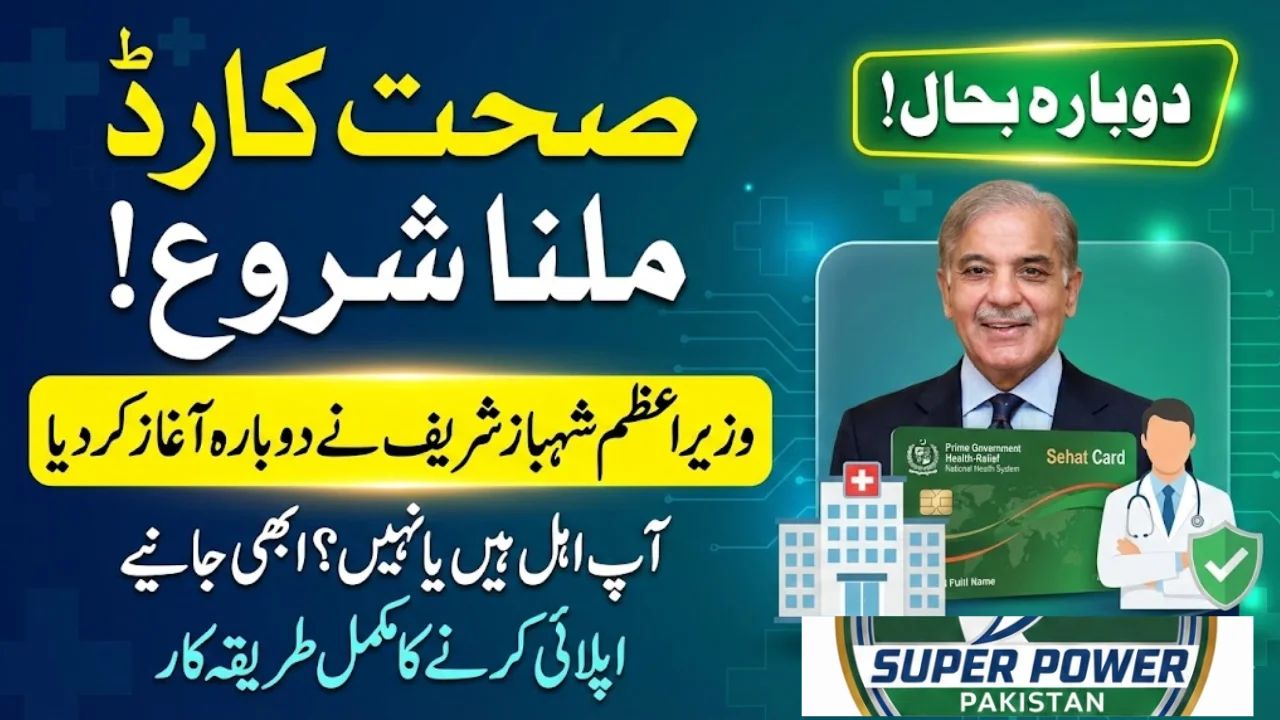
Pakistan’s national health safety net is active again for thousands of families as the Prime Minister’s Health Card program has been officially restored and expanded to Islamabad Capital Territory, Azad Jammu & Kashmir (AJK), and Gilgit-Baltistan (GB). The move brings free, cashless medical treatment back to regions where healthcare costs often push families into debt.
This restart is not symbolic. It directly determines who gets treatment, how much the government pays, and how families avoid catastrophic medical expenses.
Why the Health Card Restart Matters Now
Healthcare inflation has hit poor and middle-income households the hardest. A single surgery or prolonged hospital stay can cost several years of household income. The restored Health Card ensures that illness does not become a financial disaster.
The program treats healthcare as a right, not a privilege—especially for:
-
Daily wage earners
-
Widows and orphans
-
Labour and low-income households
-
Families without private insurance
How Much Medical Coverage Families Get
Under the restored Health Card:
-
Up to Rs. 1 million per family per year in treatment coverage
-
No payment at hospital counters
-
Cashless treatment at approved public and private hospitals
This amount covers:
-
Major surgeries
-
Hospital admissions
-
Diagnostic tests
-
Emergency treatments
-
Selected chronic disease care
For families, this means saving Rs. 2–10 lakh per serious illness episode.
Regions Where the Program Is Active Again
The Health Card has been fully revived in:
-
Islamabad Capital Territory
-
Azad Jammu & Kashmir
-
Gilgit-Baltistan
Residents of these regions can now resume treatment without upfront payments, subject to eligibility verification.
Who Is Eligible for the Health Card
Eligibility is household-based, not income-statement based.
Generally eligible:
-
Families registered in national databases
-
Low-income and vulnerable households
-
Citizens with valid CNICs
No political reference or payment is required. Eligibility is system-verified.
What Treatments Are Included
The program covers treatment at government-approved hospitals, including:
-
General and specialized surgeries
-
Maternity and emergency care
-
Orthopedic and cardiac procedures
-
ICU and life-saving interventions
Hospitals claim costs directly from the government—patients do not pay.
How Families Benefit Financially (Real Impact)
Without the Health Card:
-
Surgery cost: Rs. 3–6 lakh
-
ICU stay: Rs. 50,000+ per day
-
Diagnostics & medicines: Rs. 50,000–1 lakh
With the Health Card:
-
Rs. 0 paid by patient
-
Full treatment within coverage limits
For many families, this prevents debt, asset sales, or lifelong loans.
Transparency & Monitoring
Authorities have emphasized:
-
Third-party monitoring of hospitals
-
Verification of treatment standards
-
Prevention of misuse or overbilling
This ensures funds are spent on real patients, real treatments.
What Residents Should Do Now
-
Check Health Card eligibility via official channels
-
Visit approved hospitals only
-
Carry original CNIC when seeking treatment
-
Avoid anyone asking for fees or “activation charges”
The Health Card is free.
Quick Overview
-
🏥 Program: Prime Minister’s Health Card
-
💰 Coverage: Up to Rs. 1 million per family
-
📍 Active in: Islamabad, AJK, GB
-
💳 Payment at hospital: None
-
👨👩👧 Beneficiaries: Millions of families
Most Searched FAQs
Is the Health Card a loan?
No. It is free medical coverage, not repayable.
Can private hospitals be used?
Yes, approved private hospitals are included.
Do families need to re-apply?
In most cases, existing eligibility is restored automatically.
Is the program available in Sindh?
Extension is under consideration; currently active in specified regions.
Does it cover emergency treatment?
Yes, emergency and life-saving treatments are included.
Final Insight
The restoration of the Health Card in Islamabad, AJK, and Gilgit-Baltistan is not a policy headline—it is immediate financial protection for families. By covering up to Rs. 1 million per household, the state is stepping in where private healthcare has become unaffordable.
For eligible families, this program can mean the difference between recovery and ruin—and that is its true value.