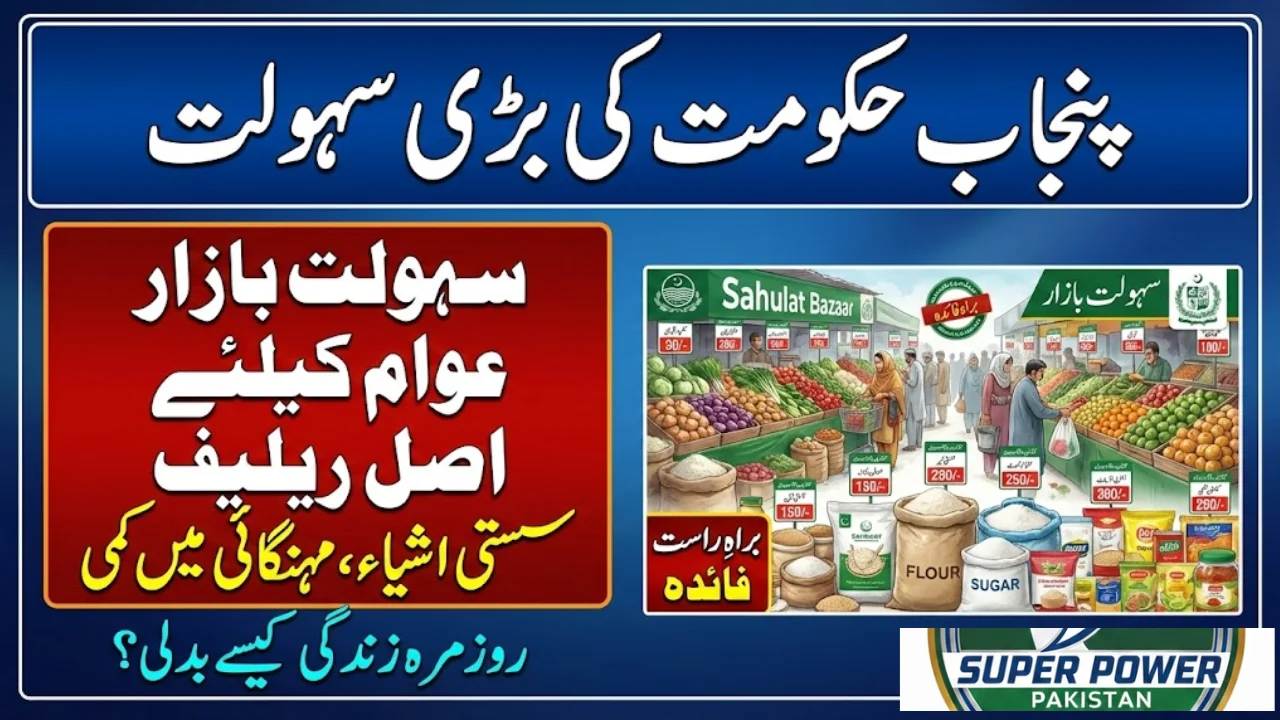
Punjab’s push to stabilize food prices has quietly turned into one of the most practical relief efforts for ordinary people. Through the expansion of Sahulat Bazaars, the provincial government is reshaping how low- and middle-income families buy everyday essentials—with dignity, affordability, and consistency.
The initiative has drawn attention after public appreciation for the hardworking vendors who keep prices low despite rising costs, highlighting that this program is not about slogans, but sustainable relief on the ground.
What Are Sahulat Bazaars and Why They Matter
Sahulat Bazaars are government-supported markets where fruits, vegetables, and essential food items are sold at controlled and subsidized prices. Unlike temporary price controls, these bazaars operate daily and are designed to cut out excessive middlemen margins.
The focus is simple:
👉 keep food affordable without compromising quality.
How Much Money Do Families Actually Save
The biggest question for households is always the same: does this really help our budget?
The answer is yes—measurably.
Average Savings Per Family
-
Vegetables & fruits: 15–30% cheaper than open markets
-
Monthly grocery savings: Rs. 3,000 to Rs. 7,000
-
Annual household relief: Rs. 40,000+ for many families
For daily-wage earners and fixed-income households, this difference is the margin between stability and stress.
Who Benefits the Most
Urban & Low-Income Families
-
Reliable prices regardless of market fluctuation
-
Less exposure to artificial price hikes
Women & Senior Citizens
-
Organized stalls
-
Transparent pricing boards
-
Reduced bargaining pressure
Small Vendors
-
Steady customer flow
-
Official backing and better earning stability
-
Respect and visibility instead of exploitation
This balance ensures both buyers and sellers benefit, making the system sustainable.
Why This Is Different from Past Price Control Efforts
Earlier price control campaigns often failed because they were:
-
Temporary
-
Poorly monitored
-
Dependent on enforcement only
Sahulat Bazaars work because they are:
-
Permanent
-
Supply-linked
-
Vendor-supported
-
Publicly monitored
This structure keeps prices realistic instead of artificially suppressed.
Impact on Inflation Pressure
While no single program can stop inflation, Sahulat Bazaars help:
-
Reduce food-driven inflation spikes
-
Set a price benchmark for nearby markets
-
Discourage hoarding and manipulation
Even private markets are often forced to adjust prices downward to stay competitive.
What Shoppers Should Know
-
Prices are updated daily
-
Items are checked for quality
-
Complaints can be registered through official channels
-
No “special access” or card is required
Anyone can walk in and buy at the same price.
Quick Snapshot
-
🏪 Program: Sahulat Bazaar
-
💰 Monthly family savings: Rs. 3k–7k
-
🥕 Items: Fruits, vegetables, essentials
-
👥 Beneficiaries: Millions of households
-
🧾 Hidden charges: None
FAQs
Are Sahulat Bazaars only for poor families?
No. They are open to everyone, but help low-income families the most.
Are prices fixed permanently?
Prices are controlled but flexible, based on supply costs.
Do vendors get paid by the government?
Vendors earn through sales, but benefit from official support and reduced overheads.
Is quality compromised due to low prices?
No. Items are regularly inspected to maintain standards.
Will Sahulat Bazaars expand further?
Authorities have indicated continued expansion, especially in high-demand areas.
Final Word
The success of Punjab’s Sahulat Bazaars lies in one thing: practical relief. By saving families thousands of rupees each month while supporting honest vendors, the initiative shows how policy can improve daily life without dependency or handouts.
In a time of rising costs, consistent affordability is the strongest form of relief—and this is exactly what Sahulat Bazaars are delivering.