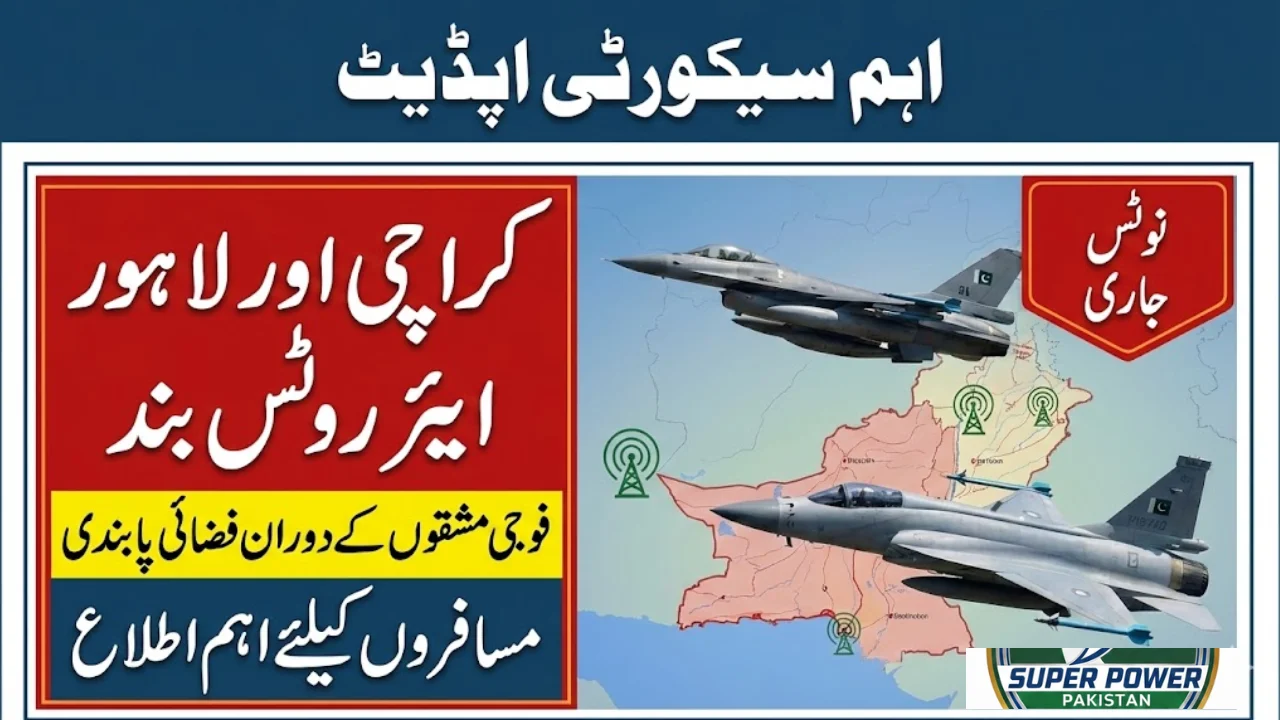
Passengers planning to travel through Pakistan’s busiest air corridors are being advised to stay alert as temporary air route closures have been introduced around Lahore and Karachi. The move is linked to scheduled military drills, a routine but sensitive operation that requires controlled airspace for safety reasons.
While the closures are short-term, they directly affect flight schedules, travel timing, and passenger planning, making this update important for anyone flying in or out of these cities.
Why Lahore and Karachi Air Routes Are Being Closed
The closures are part of pre-planned defense exercises aimed at maintaining operational readiness. During such drills, specific air routes are restricted so that military aircraft can operate without risk to civilian flights.
Authorities have emphasized that this is a precautionary safety step, not an emergency situation.
Which Areas Are Affected
The restrictions apply to selected sections of airspace within:
-
Lahore Flight Information Region (FIR)
-
Karachi Flight Information Region (FIR)
These regions handle a large share of Pakistan’s domestic and international air traffic, which is why even temporary adjustments can be noticeable to travelers.
Timing of the Closures
-
⏰ Daily window: Evening hours
-
📅 Duration: Short-term (specific dates announced internally to airlines)
-
✈️ Impact period: Flights scheduled during restricted hours
Flights outside these windows are expected to operate normally.
How Airlines Are Managing the Situation
Airlines have been instructed to:
-
Use alternate flight paths
-
Adjust departure or arrival timings
-
Coordinate closely with air traffic control
In most cases, flights are delayed or rerouted, not cancelled outright.
What This Means for Passengers
Direct Impact
-
Possible delays of 15–60 minutes
-
Changes in arrival or departure time
-
Longer routes increasing flight duration slightly
Financial Impact
There is no cash compensation announced, but passengers may benefit indirectly:
-
Airlines often rebook without extra charges
-
Missed connections are usually handled under airline policy
-
Avoiding last-minute cancellations saves rebooking costs that can run into thousands of rupees
For frequent travelers, staying informed can save time, money, and stress.
What Passengers Should Do Now
-
Check flight status before leaving for the airport
-
Keep airline apps and SMS alerts active
-
Arrive earlier than usual for evening flights
-
Avoid panic—these are controlled, planned restrictions
Travel agents and airline helplines can provide the most accurate updates.
Why These Drills Are Important
Military exercises help:
-
Maintain national air defense readiness
-
Test coordination between civil and military aviation
-
Improve response systems without real-world risk
Such drills are conducted globally and are a normal part of airspace management.
Quick Snapshot
-
✈️ Cities affected: Lahore & Karachi
-
⏱️ Nature: Temporary air route closures
-
🎯 Reason: Scheduled military drills
-
💰 Direct cash impact: None
-
📌 Passenger action: Check flight status early
FAQs
Are all flights cancelled during the closures?
No. Most flights are rerouted or delayed, not cancelled.
Is domestic travel more affected than international flights?
Evening domestic flights may feel the impact more, but international flights can also be adjusted.
How long will the restrictions last?
They are temporary and time-bound, linked only to the drill schedule.
Is Pakistan’s airspace unsafe right now?
No. Authorities state airspace remains fully safe for commercial aviation.
Will airlines refund tickets if flights are delayed?
Refund or rebooking policies depend on the airline, but support is usually provided.
Final Advisory
The temporary closure of air routes over Lahore and Karachi is a safety-first measure, not a disruption to normal aviation operations. For passengers, the key is awareness—a quick schedule check can prevent hours of inconvenience.
Once the drills conclude, air routes will return to normal without any long-term impact on travel.