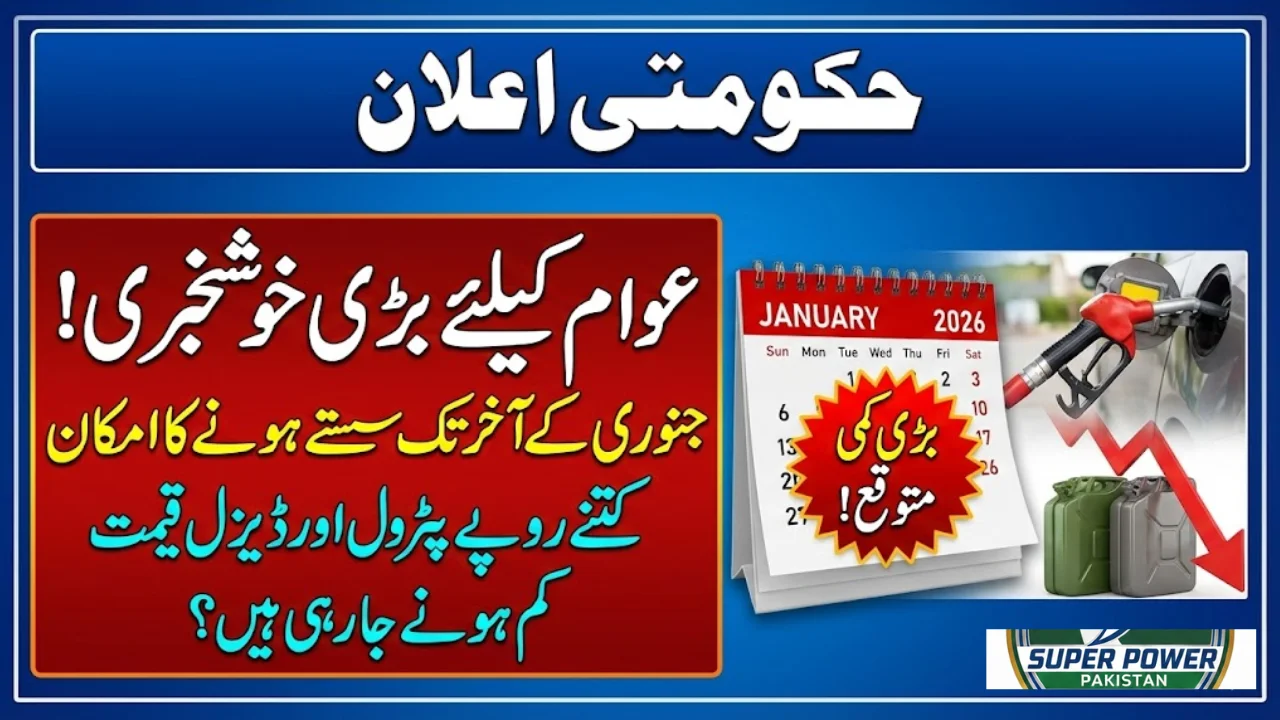
A possible drop in fuel prices is giving hope to millions of Pakistanis who have been struggling with rising living costs. By the end of January 2026, petrol and diesel rates may see a downward adjustment, offering timely relief to commuters, transport operators, farmers, and small businesses.
This development matters because fuel prices sit at the center of household budgets—from daily travel to food prices and electricity generation.
What’s Driving the Expected Fuel Price Relief
Fuel prices in Pakistan are reviewed twice a month. The upcoming review reflects:
-
Softer trends in global crude oil prices
-
Stabilization in international supply chains
-
Slight improvement in freight and import costs
When these factors align, they create room for price reduction at the local pump, subject to government approval.
How Much Could Petrol and Diesel Become Cheaper
While final rates are announced officially, market calculations suggest:
-
Petrol: Possible reduction of Rs. 4 to Rs. 5 per litre
-
High-speed diesel: Possible reduction of Rs. 2 to Rs. 3 per litre
-
Other fuels (kerosene, light diesel): Smaller cuts expected
Even modest reductions matter in an economy where fuel impacts nearly every essential item.
How Much Money Will People Actually Save
Fuel relief doesn’t come as cash, but the savings add up quickly.
For a Motorbike or Small Car Owner
-
Average monthly use: 40–60 litres
-
Possible saving: Rs. 200 to Rs. 300 per month
For Daily Commuters & Ride-Hailing Drivers
-
Higher fuel usage means Rs. 1,000+ monthly savings
-
Direct improvement in take-home income
For Transport & Goods Movement
-
Diesel price cuts help reduce:
-
Bus operating costs
-
Truck freight charges
-
Agricultural transport expenses
-
These savings eventually reflect in food prices and market rates.
Who Benefits the Most from Fuel Price Cuts
The biggest beneficiaries include:
-
Middle- and lower-income households
-
Motorbike riders and car owners
-
Public transport users
-
Farmers using diesel-powered machinery
-
Small shopkeepers relying on generators
Fuel relief spreads quietly but touches nearly every household.
Why Fuel Prices Don’t Fall as Much as Expected
Many people ask why prices don’t drop sharply even when oil prices fall globally.
The main reason:
-
A large portion of fuel prices comes from taxes and levies
-
These charges fund government operations and debt obligations
So even when international prices fall, local relief remains limited.
What Happens Next
Before the end of January:
-
Authorities will finalize price calculations
-
Exchange rate movements will be reviewed
-
A formal notification will announce new rates
Any approved change will apply for the remaining days of January 2026.
Quick Snapshot for Readers
-
Possible price cut: Yes
-
Expected timing: End of January 2026
-
Petrol relief: Rs. 4–5 per litre (expected)
-
Diesel relief: Rs. 2–3 per litre (expected)
-
Direct cash given: No
-
Monthly savings: Yes, for most households
FAQs
Will fuel prices definitely go down by end of January 2026?
A reduction is expected, but final approval depends on official calculations.
Does fuel relief mean transport fares will drop immediately?
Not always. Fare adjustments often lag behind fuel price changes.
Is diesel relief more important than petrol relief?
Yes, diesel impacts food prices, transport, and agriculture, so even small cuts matter.
Do fuel price cuts reduce inflation?
They help slow inflation, especially in food and transport sectors.
Is there any direct cash relief linked to fuel price cuts?
No. Relief comes through lower daily expenses, not cash payments.
Final Word
If confirmed, the expected fuel price relief by the end of January 2026 will offer a welcome pause for households under pressure. While the cuts may not be dramatic, even small reductions can ease monthly budgets and improve affordability across the economy.
For now, consumers should stay alert for the official announcement and plan expenses wisely as the review date approaches.